 Waymark Nordic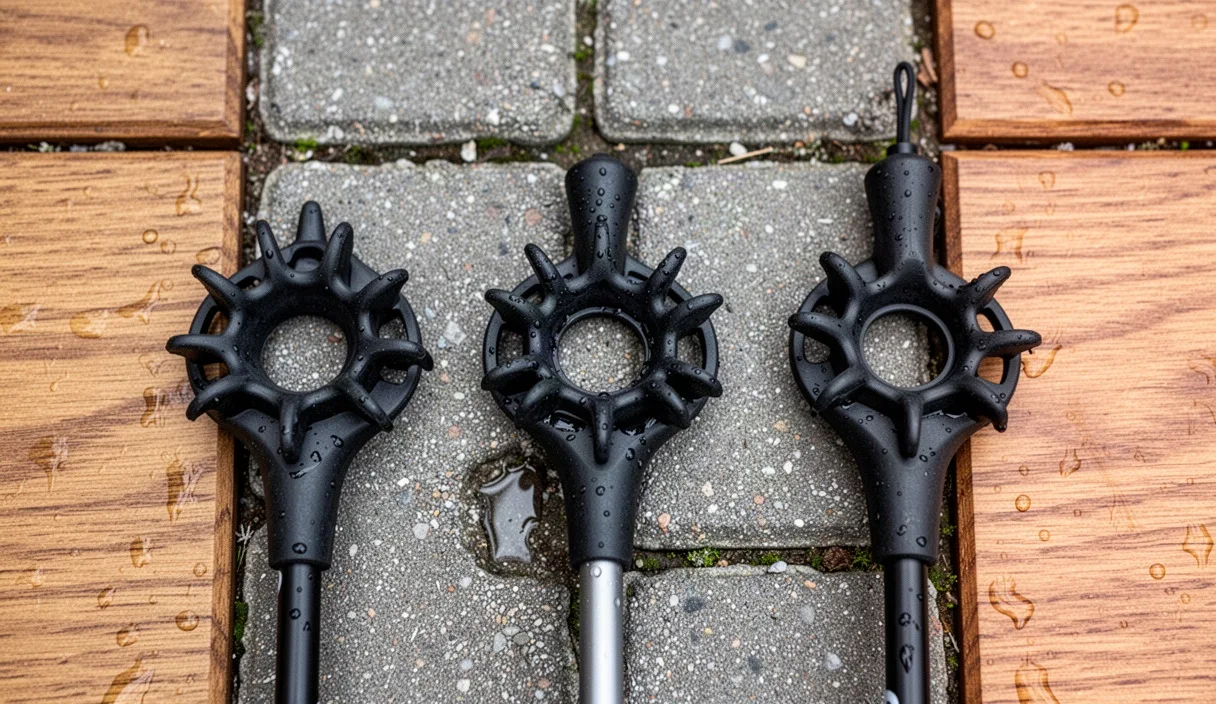
Walking across dry, paved surfaces with Nordic walking poles introduces a distinct mechanical challenge. The metal tip that bites cleanly into dirt or damp turf chatters furiously against tarmac, jarring your hands and broadcasting your arrival to everyone within four streets. Rubber paws, often called asphalt pads or walking feet, bridge this gap by dampening impact and converting downward push into forward drive.
Choosing the right paw is not simply a matter of grabbing whatever spare parts sit in the bargain basket at your outdoor shop. Differences in rubber density, internal metal washers, contact angles, and tread patterns dictate whether your pole grips the pavement firmly or skips out behind you on a damp slope. Getting these details right keeps your wrists comfortable and prevents premature wear on your gear.
Paws Versus Bare Tungsten Tips
Tungsten carbide tips are designed for penetrative grip. When you plant a bare pole tip into forest loam, packed gravel, or chalk, the hard metal point pierces the top few millimetres of terrain to create an anchor point. On paved roads, concrete footpaths, and stone slabs, the tip cannot penetrate. Instead, it strikes an unyielding surface, creating high-frequency vibrations that travel directly up the pole shaft into your wrist, elbow, and shoulder joints.
A bare tip on tarmac also lacks surface friction. Because Nordic walking relies on planting the pole at an acute angle behind your body, an unyielding metal spike will skitter along the street surface during the propulsion phase. The loss of traction ruins your rhythm and reduces the horizontal force you can apply through the strap. Over time, dragging tungsten across asphalt rounds off the sharp chisel edge of the tip, ruining its ability to bite when you finally return to grass or dirt trails.
Rubber paws resolve this problem by exchanging penetration for friction. A pliable rubber compound deforms minutely under your weight, wrapping around the micro-textures of aggregate, bitumen, and stone. This deformation creates a secure mechanical grip that supports backward propulsion while acting as a shock absorber. While you sacrifice the instantaneous bite of a spike in dirt, you gain joint comfort and quiet movement on roads.
Angled Boot Shapes Explained
Trekking pole rubber tips are usually round, bell-shaped cups meant for vertical ground plants. Nordic walking paws, by contrast, look like miniature asymmetrical running shoes or boots. This specific geometry directly reflects the biomechanics of the Nordic walking stroke.
In standard Nordic walking technique, your poles hit the ground at an angle between 40 and 50 degrees relative to the pavement, never vertical. The bottom of a Nordic paw is moulded with an elongated, bevelled base so that when your arm swings back and plants the pole behind your body line, the entire textured sole of the rubber boot sits flush against the tarmac. If you were to use a flat, symmetrical trekking ferrule at a 45-degree angle, only the tiny outer edge of the rubber ring would touch the ground, leading to immediate slippage.
Fitting an angled boot requires attention to direction. The "toe" of the boot must always point backwards, away from the direction you are travelling, while the higher heel portion faces forward. This arrangement allows the reinforced back edge of the tread to catch the tarmac as you push down and back through the strap. Pointing the toe forward is a surprisingly common sight on urban walking paths, and it instantly robs the stride of its power by lifting the gripping surface away from the road.
Hard Plastic Versus Natural Rubber
Replacement paws look nearly identical on a shelf, but their material composition determines how they behave on cold or wet stone. Manufacturers generally use one of two materials: injection-moulded thermoplastic elastomers or vulcanised natural rubber compounds.
Thermoplastic variants are inexpensive, rigid, and resistant to abrasive wear. They hold their shape over hundreds of miles and rarely mark light-coloured stone. However, hard plastics suffer from a high durometer rating, meaning they do not deform easily under load. When the autumn temperature drops below 7 degrees Celsius, or when fine rain coats the pavement, hard plastic tips turn slick. They tend to skate across road paint, metal utility covers, and polished council paving slabs with alarming ease.
Vulcanised rubber compounds offer superior grip across shifting weather conditions. Softer rubber remains pliable in freezing conditions, conforming to rough surfaces and holding firm on damp tarmac. The trade-off is durability. Softer compounds shed material quickly through frictional abrasion, especially if your technique involves dragging the pole tip slightly during the recovery swing. For everyday road walking, the safety and positive grip of softer vulcanised rubber outweigh the longer lifespan of hard plastics.
| Feature | Hard Thermoplastic Paws | Vulcanised Natural Rubber |
|---|---|---|
| Wet Weather Grip | Low to moderate; prone to skidding | High; bites into micro-grit |
| Cold Temperature Performance | Hardens quickly below 7C | Stays flexible in freezing weather |
| Lifespan | 400 to 600 kilometres | 200 to 350 kilometres |
| Shock Absorption | Firm; transmits mild vibration | Soft; high dampening capacity |
| Average Weight per Pair | 28 to 34 grams | 38 to 48 grams |
Signs of Wear and Replacement Cycles
Rubber paws are consumable components. Letting them wear down too far damages your poles, alters your walking posture, and can strain the tendons in your forearm as you compensate for slip. A disciplined gear inspection takes thirty seconds and saves money on costly tip replacements.
The clearest sign that a paw needs replacing is the thinning of its tread pattern. Most Nordic paws feature directional siping or raised blocks along the sole. Once these grooves wear down to a smooth, shiny patch, the rubber can no longer channel away surface water or grit, increasing the chance of slipping on wet roads. If you can see light through the sole or feel substantial flexibility when pressing the bottom with your thumb, the compound is spent.
The most dangerous form of wear occurs from the inside out. Quality paws feature an embedded steel washer positioned at the base of the internal sleeve. This metal disc stops the sharp tungsten tip of your pole from punching directly through the bottom of the rubber boot. Over time, repeated downward strikes can deform, crack, or dislodge this washer. Once the washer fails, the tungsten spike will pierce the rubber sole within a few miles, striking the ground directly and creating an annoying click that signals your rubber paw is effectively dead.
To evaluate your paws for replacement, follow these steps:
- Inspect the internal cavity. Shine a torch inside the paw to confirm the steel washer is seated flat and shows no hairline fractures or deep puncture indentations from the carbide spike.
- Measure the remaining tread depth. If the deepest channel on the base measures less than 1.5 millimetres, retire the pair.
- Examine the outer wall for perimeter cracking. Rubber that has dried out or degraded from road salt will develop spider-web cracks along the collar, which leads to the paw falling off mid-stride.
- Check the fit on the pole ferrule. If the paw slides on or off without firm resistance, the internal walls have stretched, and the paw will likely be swallowed by the next muddy verge you pass.
Top Picks for Nottingham Tarmac
Nottingham presents an unforgiving mix of walking surfaces. Walkers regularly encounter coarse-chip asphalt along the ring roads, smooth red-tinted tarmac along suburban paths, slick Victorian sandstone around the Lace Market, and wet timber or compacted cinder along the Beeston Canal towpath. Finding gear that handles this varied terrain requires balance.
Leki Silent Spike Pad
This design incorporates tiny, hardened steel pins directly into a vulcanised rubber sole. While standard paws slide instantly on mossy tarmac or damp leaves, these miniature studs provide micro-purchase without the ear-splitting rattle of a bare carbide spike. They are slightly heavier than basic rubber paws, weighing around 42 grams each, but their traction along the damp slopes of Wollaton Park or the slippery paths climbing towards Mapperley Ridge is unmatched. They do carry a premium price tag, yet they outlast standard rubber models by roughly 150 kilometres.
Exel Asphalt Paws
Exel produces the benchmark traditional boot paw. Built from a medium-density rubber compound, it balances durability with dependable grip on British roads. The angled contact pad is slightly wider than average, distributing downward pressure evenly across the asphalt. The internal steel washer is thicker than those found on generic unbranded imports, preventing premature punch-through. They fit 10-millimetre tapered ferrules perfectly and handle the damp aggregate around the National Water Sports Centre with composure.
Gabel Roaster Rubber Pads
Gabel uses a particularly soft rubber blend that delivers superior shock absorption. If you suffer from joint sensitivity in your wrists or forearms, these pads reduce impact shock better than harder alternatives. The tread features deep lateral sipes that clear surface water effectively on wet city pavements. Because the rubber is softer, you will wear through a pair in roughly 200 kilometres of aggressive walking, but the physical comfort makes the frequent replacement cycle worthwhile.
Common Mistakes
The most frequent error is walking with misaligned paws. When you attach a boot-shaped paw to your pole, the base must align precisely with the direction of your wrist swing. If the paw twists 15 degrees inward or outward, only the sharp outer edge of the tread contacts the tarmac. This uneven contact causes rapid edge wear and causes the pole to twist in your palm on every plant. Check your alignment by sighting down the shaft from strap to tip before setting out.
Another regular misstep is carrying the wrong internal diameter. Nordic walking pole tips taper at slightly different rates depending on the manufacturer. Most brands use an 8-millimetre, 10-millimetre, or 11-millimetre taper at the ferrule base. Forcing an 8-millimetre paw onto a 10-millimetre tip stretches the rubber collar, splitting the side seams within a week. Conversely, putting an 11-millimetre paw on a narrow tip leaves it loose, guaranteeing it will pop off inside the first grate or cattle grid you cross.
Walkers also frequently leave their rubber paws attached when moving onto soft off-road ground. Rubber paws lack the surface area and sharp profile needed to hold in grass, deep mud, or loose gravel. Leaving them on across wet meadows forces the rubber to act like a slick sled, causing slips. When you step off tarmac onto trail, pull the paws off, stow them in your pocket, and let the bare tungsten tips do the work they were made for.
Next Steps for Your Setup
Take your poles out today and examine the bottom of the tips under bright light. If your paws are smooth, cracked, or beginning to show the silver glint of an internal metal spike poking through the tread, set them aside for recycling. Measure the external diameter of your pole ferrule with a simple ruler or calliper so you know whether you need an 8, 10, or 11-millimetre internal sleeve.
Pick up two pairs of replacement paws made from natural or vulcanised rubber rather than unbranded hard plastic. Keeping an identical, unworn pair in your jacket pocket or waist pack ensures that when you inevitably lose a paw to a roadside storm drain or discover a worn-out washer mid-session, your walk can continue without interrupting your rhythm or battering your joints. If persistent wrist or shoulder pain continues despite using fresh rubber paws, arrange a session with a qualified Nordic walking coach or a physiotherapist to evaluate your pole plant angle and strap tension.