
Waymark Nordic
+44 1273 911508

Waymark Nordic — movement notes

Knee-friendly guide

Knee-friendly movement for everyday confidence

Low-impact options for walking, stairs and the ordinary business of getting up out of a chair — plus how to build strength around the knee without a gym membership.

Why a level pavement can feel easier than a staircase

Knees get noisy about stairs

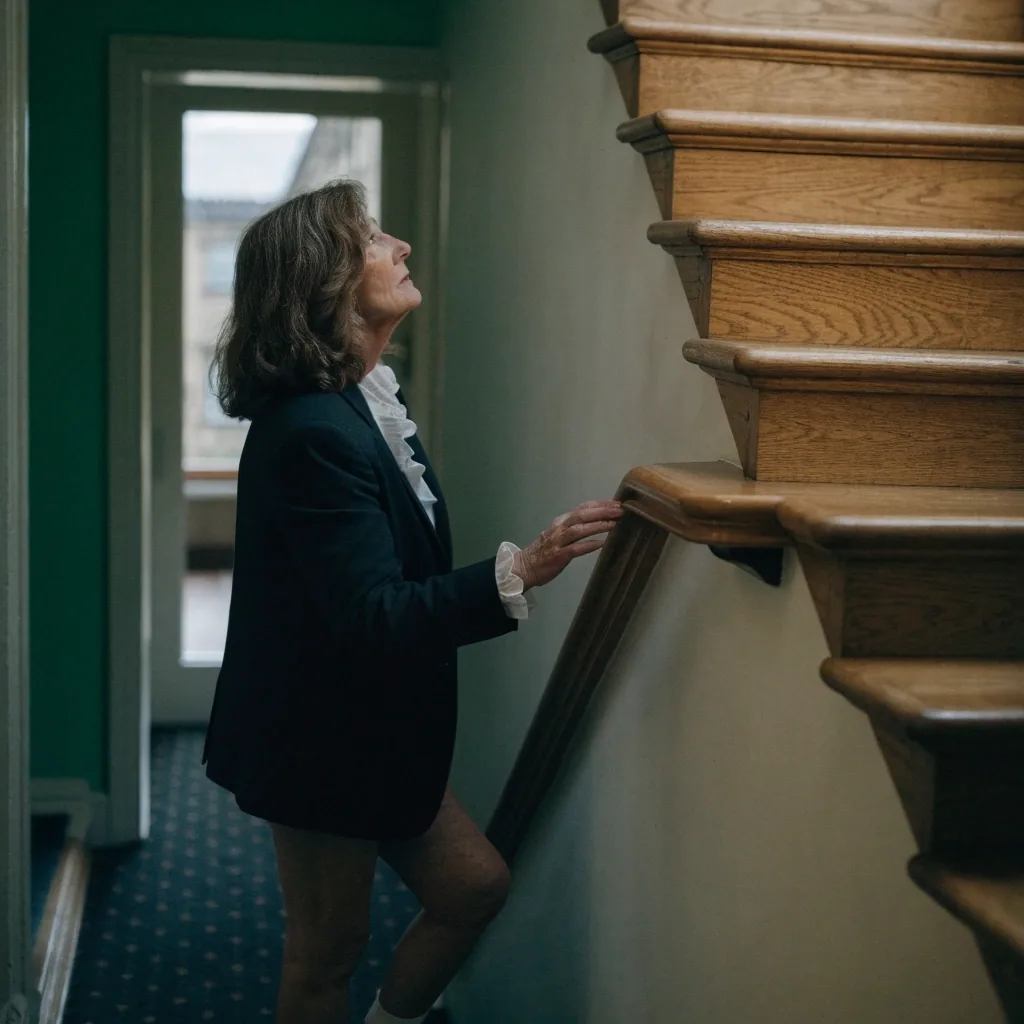
A person pausing mid-step on a staircase at home with a hand resting on the banister

Walking on the flat and walking down stairs are different jobs. Going down loads the knee through a longer range under body weight, and the thigh muscle works to control the drop. That is why a knee can feel settled on a level pavement and less settled on a staircase.

It is a loading question rather than a sign that something is being damaged. Change the load and the experience usually changes with it — which is why the work below leans on controlled lowering rather than on doing more repetitions, faster.

What changes the load

  • Range under weight

    A longer descent under your own body weight is simply more work for the knee than a flat stride.

  • Pace of the descent

    Rushing the last two steps gives the thigh muscle less time to control the movement.

  • Support within reach

    A banister or a worktop takes weight off the knee while the leg learns the pattern again.

  • Surface underfoot

    Uneven ground asks more of the whole leg, including the ankle and the hip, than a flat path.

Low-impact options that still count as exercise

Walking, cycling and swimming appear repeatedly in UK musculoskeletal guidance as the aerobic options worth building around. The aim is regular moderate activity across the week rather than intensity on any single day — some NHS leaflets mention 150 minutes a week as a broad target. All three below are repeatable, and repeatable is the only quality that really matters here.

On foot

Flat walking

A flat route beats a hilly one while you are finding your footing. Pick a loop you can shorten without turning around — a park with more than one exit, or a pavement with a bench partway.

Ten to twenty minutes at a conversational pace, most days, gives you the aerobic block. If one long walk leaves you stiff the next morning, split it into two shorter ones and see how that sits.
Seated

Static bike

A static bike lets you turn resistance up or down precisely, which is useful on a day when the knee is less willing than usual. Start at a resistance you can hold comfortably for ten minutes.

In water

Swimming

Water takes the impact out of the movement entirely, so it can suit a knee that objects to pavement. Gentle lengths at your own pace are enough to start.

Two patterns worth practising daily

Both of these are movements you already do. The only change is that you do them deliberately, slowly, and often enough that the leg recognises the pattern. Slow is the point — lowering under control builds more than standing up does.

Chair work — done dozens of times a day anyway

Sit-to-stand, deliberately

Feet flat and slightly apart, lean forward from the hips, push through both feet, stand tall, then lower slowly back to the chair. Start with a higher chair or use the arms for support, and reduce the hand assistance as it gets easier.

Step work — translates straight to stairs and kerbs

The bottom two steps

Use the bottom two steps of your own staircase. Lead with the stronger leg going up, lead with the other coming down, and keep the pace slow. Two minutes is plenty to start with. If both legs feel equally uncertain, hold the banister — there is no prize for doing it without support.

Pace — pick the middle gear

Faster than a stroll, slower than a march

There is a useful middle gear for knee-friendly walking: faster than a stroll, slower than a march, and still able to hold a conversation. If you are gasping, you are above it. If you are ambling, you can nudge it up. Ten to twenty minutes at that pace, most days, is enough.

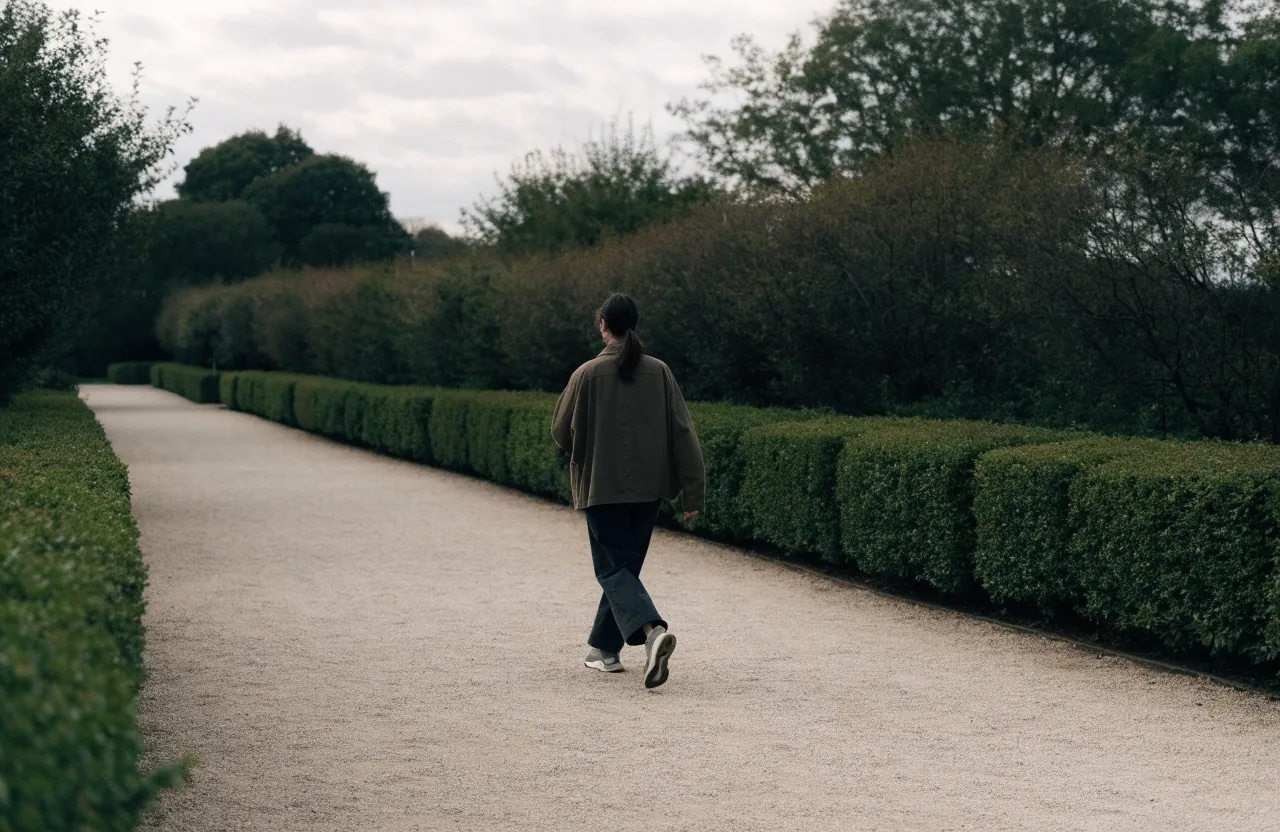
A walker mid-stride on a flat paved footpath in a park on an overcast morning

Flat pavement, conversational pace, no agenda

Walking pace, and how to pick it

A pace you can talk through is a pace you can repeat tomorrow. That is the whole test, and you can apply it without a watch or an app. The two shortcuts below cover most of the ways it goes wrong.

  • Too fast

    If you cannot finish a sentence without stopping for air, drop the pace. You have moved past the gear that builds endurance comfortably.

  • Too slow

    If you could carry a full conversation with room to spare, nudge it up. A slightly brisker walk usually feels better than a long slow amble.

Strengthening work around the knee

The muscle that matters most here is the quadriceps, the front of the thigh, because it helps control the knee as it bends. Seated knee extensions, sit-to-stands and step work all train it.

Strengthening two or three times a week is the pattern suggested in East Sussex guidance, which leaves recovery days in between. Add a little resistance only when the current version feels genuinely easy. Progress is slow and that is normal.

Balance work for steadier steps

Balance exercises are included in comprehensive exercise advice for stiff joints, and for good reason: steadier feet mean less hesitation, and hesitation is what turns a knee twinge into a fall risk you start planning around.

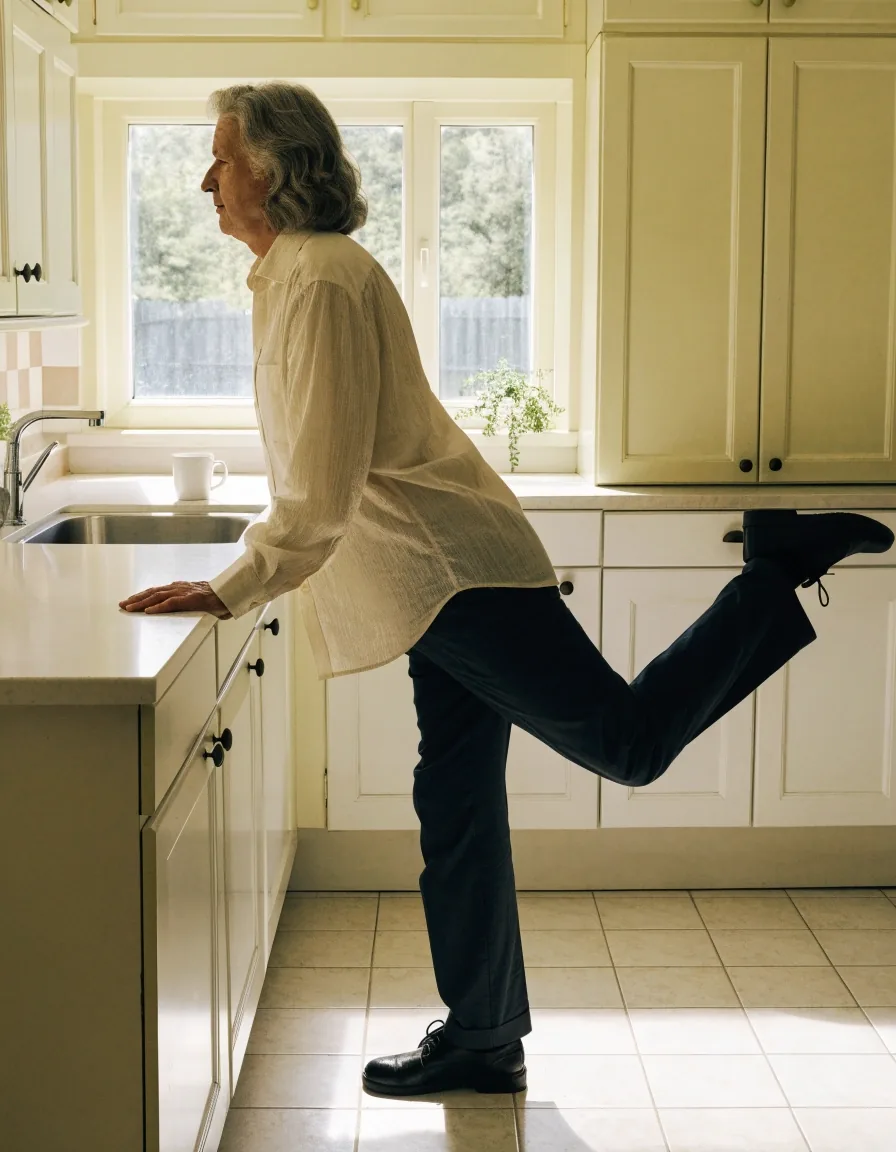
Stand on one leg while waiting for the kettle. Walk heel-to-toe along a hallway. Hold a worktop if you need to. This is one of the few categories where a little, done often, clearly outperforms a big weekly session.

Hands resting on the arms of a kitchen chair during balance practice at home

Where most people start

  • One-leg standing at the kettle or the sink, thirty seconds at a time.
  • Heel-to-toe walking along a hallway with a wall within reach.
  • Standing on one leg with eyes open before eyes closed, never the reverse.

When movement guidance stops being enough

When a knee deserves a professional look

What signs mean it is time to book an appointment?

If a knee gives way, locks, swells noticeably, or hurts at rest as well as on movement, that is a conversation for a GP or physiotherapist rather than a routine you can adjust yourself. Movement guidance has limits, and this is one of them.

What if an exercise makes things worse?

NHS Inform's general advice applies here: stop exercises that make things worse or cause new pain. Try a smaller range, less resistance, or a shorter set once things settle. If it keeps recurring, get it looked at properly.

How long before something should feel different?

If something does not settle within a couple of weeks of sensible movement, get it looked at. Some people notice the stairs feel less loaded within days; for others it takes longer, and both are ordinary.

Do I need any equipment?

A chair, a staircase, a wall to steady against and a flat stretch of pavement cover almost everything here. Nothing on this page needs a gym, a machine or a purchase to try.

Is this page a substitute for advice from a professional?

No. Waymark Nordic publishes routines and general information, not assessments. What we write here is meant to sit alongside the guidance you get from your own GP or physiotherapist, not to replace it.

Where to go next

Three routes from here, depending on what you need. All of them are free to read, and none of them need an account.

Waymark Nordic publishes movement routines and general information for adults in the UK who want to stay active. Nothing on this page is a substitute for advice from your own GP or physiotherapist.